
Click here to see A New Life Awaits: Movie Screenplay Trailer!
Book Reviews
Miraculous Souls Communicate
Book One and Book Two
Amazon Review
Murray: Art and Literature Make for Mystical Awareness
June 29, 2026
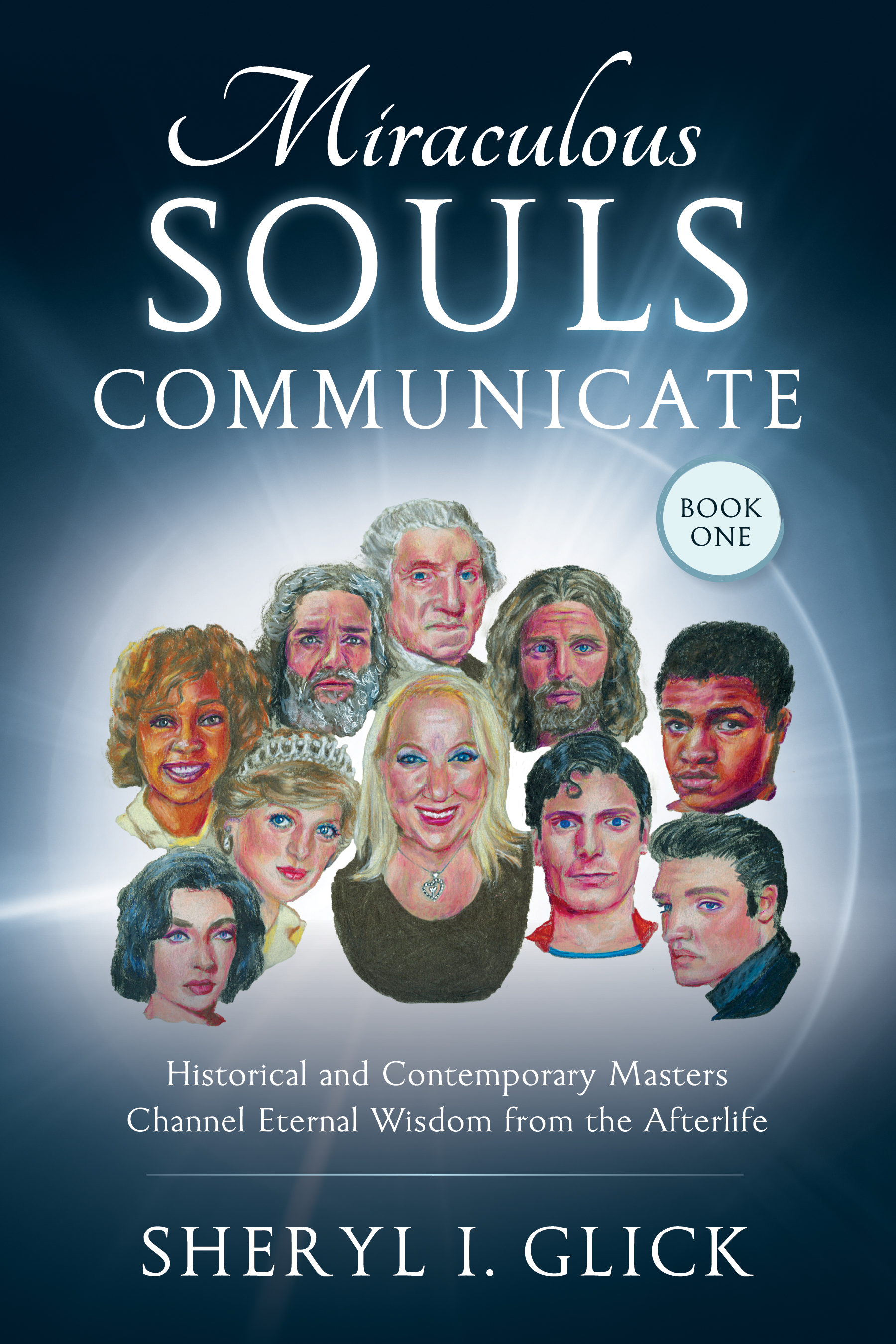
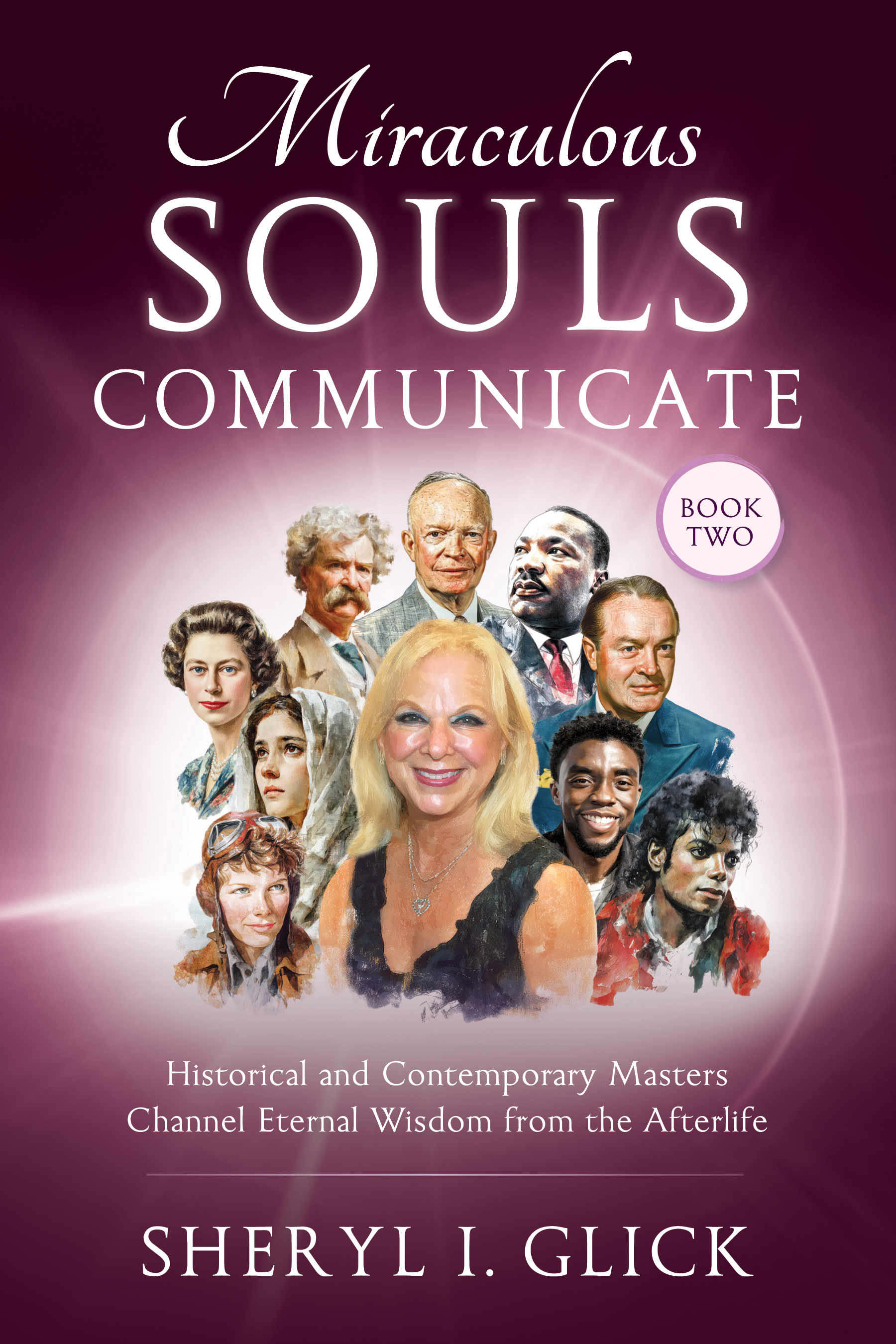
The cover art immediately creates a sense of mystery and emotional gravity. The collection of historical faces surrounding the glowing central image of Sheryl Glick perfectly captures the book’s blend of spirituality, history, and philosophical reflection. Fortunately, the content itself lives up to that atmosphere. As someone who studies history casually in my free time, I appreciated how the book reimagines famous figures not as distant icons, but as evolving spiritual beings still invested in humanity’s future. In both books, the themes flow together naturally, and the author’s voice is calm and confident throughout. Even skeptical readers may find themselves unexpectedly moved by the sincerity, compassion, and hope woven into these pages.
Glenn Kaufman: A fresh spiritual perspective
May 16, 2026
Thought provoking, comforting, and helpful for navigating today’s world. Sheryl Glicks voice shines through on every page. Highly recommend for anyone seeking meaning, healing or a fresh spiritual perspective.
Henry Wong: Beautiful Book. Must read!
May 5, 2026
Miraculous Souls Communicate is a beautiful book that is contemplative and emotionally resonant exploration of connections. The book blends personal narrative, spiritual insight, and reflective storytelling to make a case for the idea that communication between souls—whether living, departed, or spiritually intertwined—is not only possible but deeply meaningful. Must read!
Samantha Zirin: Unique and Inspiring Book
April 30, 2026
A really interesting and uplifting book that shares positive, thought-provoking messages about life, purpose, and connection beyond this world. It encourages you to reflect and live more fully, knowing there’s something bigger out there. An engaging read with a unique perspective. I’d definitely recommend it!
Book Fan: A beautiful book!
April 28, 2026
A beautiful book that explores positive life affirming messages from spirit, teaching those of us on Earth to live fully and well knowing that our ancestors far and wide are paving the way for future generations of souls. An engaging and enlightening read, with beautiful cover art by the author's teenage granddaughter. Highly recommend!
Book 1 and Book 2 Reviews
Our Loved Ones are Nearby
After losing my husband last year, I found myself adrift, constantly wondering if his spirit still existed somewhere. I picked up this book hoping for comfort, and it delivered far beyond my expectations. Sheryl Glick’s channeled conversations provide a profoundly soothing perspective on the afterlife. The idea that our souls are engaged in a continuous journey of learning resonates deeply with my current healing process. I was particularly moved by the message that our loved ones watch over us. While I initially approached the concept with mild hesitation, the warmth in Glick’s writing dissolved my barriers. The gentle pacing allows the reader to absorb each master’s wisdom slowly. It felt less like reading a book and more like sitting down for a cup of tea with an old, wise friend. I finally feel a sense of peace.
– Janis
Humanity Survives All Political Distress
As an amateur historian, I am usually strictly dedicated to biographies and primary source documents. However, this unique approach to historical figures piqued my curiosity. Reading purported interviews with George Washington, Abraham Lincoln, and Thomas Jefferson was utterly fascinating. The author manages to capture the distinct flavor of their earthly challenges while elevating their perspectives to a broader, more universal vantage point. I appreciated how the book addresses the lingering scars of the Civil War and the foundational struggles of American democracy. Hearing these leaders reflect on our current political polarization offers a strangely comforting reminder that humanity has always navigated turbulent waters. Glick doesn’t shy away from their human flaws, acknowledging them as necessary steps in their soul’s evolution. It is a highly unconventional but surprisingly thought-provoking lens through which to view American history.
– Abraham
Remarkable Past Masters Wipe Away Skepticism
Approaching a text grounded in mediumship requires a willing suspension of disbelief, especially for someone trained in rigid academic methodologies. Initially, the premise of conversing with Carl Jung or Aristotle from the great beyond felt slightly absurd. Yet, putting aside empirical skepticism, the underlying philosophies presented here are undeniably compelling. The book constructs a cohesive psychological and spiritual framework emphasizing collective human dignity. The dialogue attributed to Jung regarding trauma and recovery aligns harmoniously with analytical psychology, framed within a metaphysical context. While I cannot definitively validate the author's intuitive channeling, I must commend the sophisticated thematic structure. The text successfully bridges ancient philosophical inquiries with modern societal anxieties. It serves as an intriguing sociological artifact, highlighting our enduring cultural desire for guidance from past masters in an increasingly chaotic, technologically driven modern world.
– Robert
Appreciating People and Life Made Easy Through Spirit’s Messages
I usually stick to thrillers and mysteries, so this was a major departure for my reading habits. I grabbed it on a whim because the title sounded uplifting. Honestly, I’m so glad I gave it a shot! The format makes it incredibly easy to digest. Since it’s broken down into individual interviews, you can read one or two chapters before bed without losing the thread of the narrative. Some of the messages really made me stop and think about how I treat people in my everyday life. The section featuring Princess Diana was particularly beautiful and made me tear up a bit. It’s a very relaxing, positive read that doesn’t bog you down with overly dense spiritual jargon. If you want something light but meaningful to break up your usual reading routine, this is it.
– Jacqueline
Spiritual Healing Assisted by the Release of Unwanted Anxiety
Sheryl Glick’s profound connection to Universal Source energy is palpable on every single page of this radiant volume. As a practicing Reiki healer myself, I was immediately drawn to the chapter featuring Dr. Mikao Usui. The insights channeled regarding the crown chakra and the eternal flow of healing vibrations felt incredibly authentic and aligned with my own meditative experiences. The book functions as a spiritual tuning fork, helping readers recalibrate their internal frequencies away from the dense, heavy anxieties of our modern society. The author’s emphasis on transforming negative karma into pure light is exactly the medicine our fractured world requires right now. This isn't just a collection of interviews; it is a vital energetic transmission. I plan to recommend this highly illuminating text to all of my clients seeking to deepen their metaphysical awareness.
– Paul
A Book Cover as Stunning as Art by Legendary Artists
Before even opening the pages, I was immediately captivated by the exquisite cover art crafted by the author’s granddaughter. That delicate, thoughtful design sets the perfect tone for the wisdom contained inside. The chapters focusing on legendary artists like Michelangelo, Leonardo da Vinci, and Vincent Van Gogh are absolute standouts. Glick translates the passion and torment of the creative process into a beautiful spiritual language. Hearing Van Gogh’s soul express a newfound peace after a lifetime of mental anguish was breathtakingly poignant. The book proposes that artistic expression is one of the highest forms of divine communication, a concept that resonates deeply with my own worldview. It beautifully illustrates how the canvas or the marble block is merely a conduit for eternal truth. This is a wonderfully inspiring read for anyone devoted to the creative arts.
– Ceil
The Best of Hollywood Actors Share Their Trauma and Their Joy
Reading this felt a lot like watching a classic Hollywood epic—sweeping, emotional, and filled with larger-than-life personalities. It reminds me somewhat of the nostalgic magic found in films like "Midnight in Paris," where past and present seamlessly collide. The author’s interviews with cinema icons such as Humphrey Bogart, Natalie Wood, and James Dean offer a fascinating glimpse behind the glamorous facade of the studio system. I loved how the book addressed the hidden traumas of stardom, exploring how these actors used their craft to channel their deepest spiritual vulnerabilities. Hearing Rock Hudson and Montgomery Clift reflect on their personal struggles with identity and societal expectations was deeply moving. It provides a highly sympathetic, spiritual post-script to their tragic earthly narratives. Any true cinephile will find these celestial Hollywood conversations to be incredibly captivating and heartwarming.
– Dennis
Finding Our American Way as Proposed by Loved Ones in Spirit
In an era defined by extreme partisan division and relentless technological noise, this book serves as a crucial moral compass. I was entirely fascinated by the author's channeled dialogues with John F. Kennedy and Mahatma Gandhi. Their posthumous reflections on the current state of global politics are both sobering and remarkably hopeful. The text boldly addresses modern controversies, condemning the greed of corporate elites and the manipulation of the masses by corrupt leadership. Yet, it never descends into pure cynicism. Instead, it advocates for a return to constitutional integrity and fundamental human rights. The assertion that we must bridge the gaps between races and socio-economic classes is a timely reminder of our shared democratic responsibilities. It is a surprisingly urgent political manifesto, uniquely disguised as a work of metaphysical literature. Highly recommended for distressed voters.
– Lindsey
A Book Like No Other-A Miraculous Masterpiece for Healing Today’s Challenges
Wow, what an absolutely incredible journey this book takes you on! I could not put it down once I started. The sheer volume of historical figures Sheryl Glick connects with is mind-blowing. From musicians and politicians to scientists and actors, every single chapter offers a fresh, brilliant perspective on how to live a better life. I was completely mesmerized by the messages about releasing fear and embracing our own inner power. The writing is so warm, accessible, and full of radiant positivity. It truly feels like a beacon of light cutting through all the darkness in the world right now. I have already ordered three extra copies to give to my friends and family for the holidays. If you need a massive boost of inspiration and joy, you absolutely must read this miraculous masterpiece today!
– Maria
Eternal Wisdom Illuminates my Soul Bringing Peace
Approaching my eightieth birthday, I find my thoughts increasingly turning toward the legacy we leave behind and the mystery of what comes next. Reading this collection felt like receiving a comforting letter from the universe. I vividly remember listening to FDR’s fireside chats as a child, and seeing historical names brought to life again here sparked profound nostalgia. The author's gentle exploration of soul evolution gave me a great deal to ponder during my quiet afternoons in the garden. I was especially touched by the recurring theme that our hardships are simply steppingstones toward eternal wisdom. It validated many of my own life experiences, reminding me that the love we cultivate is the only true currency we take with us. It is a beautiful, deeply comforting book for anyone reflecting on the twilight of life.
– Margie
Higher Consciousness is the Gift of a Life Well Lived
As a student of classical philosophy, I found this metaphysical text to be a highly unorthodox but engaging intellectual exercise. Synthesizing the teachings of Aristotle with the transcendentalism of Ralph Waldo Emerson within a spiritualist framework is certainly an ambitious undertaking. The author utilizes the concept of channeled dialogue to explore complex ontological questions regarding the nature of existence, free will, and the soul’s persistent drive toward self-actualization. While traditional empiricists might dismiss the premise, the thematic exploration of unity versus division is fundamentally sound. I appreciated the nuanced discussions on how societal constraints stifle innate human potential. The text challenges the reader to look beyond materialistic paradigms and consider a broader, interconnected universal consciousness. It serves as a fascinating alternative dialogue on ethics and purpose, demanding an open mind and a willingness to explore the intangible.
– Helen
Science and Spirituality Merged are the Best of All Worlds
I am generally a person who relies on hard data, physics, and empirical evidence, so a book about talking to spirits is far outside my usual wheelhouse. However, the inclusion of brilliant minds like Nikola Tesla and Marie Curie drew me in. I was genuinely intrigued by how the author framed scientific discovery as a form of divine channeling. The idea that Tesla’s concepts for alternating current or Curie’s research into radiation were downloads from a higher universal intelligence is a captivating premise. The book posits that science and spirituality are not mutually exclusive, but rather two sides of the exact same cosmic coin. Hearing these legendary inventors discuss the modern climate crisis and our dangerous reliance on fossil fuels was surprisingly relevant. It made me reconsider the energetic interconnectedness of the entire physical universe.
– Isaac
Understanding Spiritual Leaders in their Infinite Love for Life
This beautiful collection truly blessed my spirit. The author’s profound respect for the Divine is evident in every single chapter. The messages channeled from Jesus of Nazareth and Mother Mary brought tears to my eyes, reinforcing the timeless biblical truths of compassion, forgiveness, and unconditional love. I deeply appreciated how the text emphasizes that God never abandons us, even during our darkest hours of physical suffering. Reading about Pope John Paul II’s transition into eternal peace was incredibly moving and reaffirmed my own faith in the Heavenly Father’s grand design. While the book encompasses many different historical viewpoints, the underlying current of pure, unifying love aligns perfectly with Christian teachings. It is a wonderful reminder to pray without ceasing and to treat our neighbors with the dignity befitting children of the Creator. Truly a miraculous read.
– Grace
Professional Athletes Merge with Physical Grit and Discipline for Success
You wouldn't normally expect to find legendary athletes in a book about spiritual wisdom, but that’s exactly what makes this such a knockout read. The chapters featuring Muhammad Ali, Jackie Robinson, and Babe Ruth are stellar. Glick captures the sheer physical grit required to excel in professional sports, while revealing the deep inner resilience these men possessed. Hearing Ali discuss using his physical strength to combat racial injustice on a soul level gave me a whole new appreciation for his legacy. The book beautifully illustrates how discipline, teamwork, and passion found in athletics are profound spiritual exercises. It explores how these icons overcame massive societal prejudices to unite people through the universal language of sports. It’s a totally unique perspective that any sports enthusiast with an open mind will thoroughly enjoy.
– Joe
Poetry, Prose, and Messages from Spirit are the Language of the Soul
What a sublime literary tapestry Sheryl Glick has woven! As a voracious reader of classic literature, I was captivated by the inclusion of titans like Charles Dickens, Oscar Wilde, and Elizabeth Barrett Browning. The author beautifully honors their respective voices, exploring how their earthly writings were manifestations of their spiritual evolution. Wilde’s reflections on the painful intersection of societal judgment and authentic love were heartbreakingly poignant. Furthermore, the explanation of how Dickens utilized his own childhood poverty to foster deep empathy within his enduring fictional characters is a profound observation. The book suggests that poetry and prose are the very language of the soul, bridging the gap between the mortal coil and the divine. It is an incredibly thoughtful, evocative exploration of the creative spirit that will leave bibliophiles pondering the true origins of inspiration.
– Jennifer
Channeled Messages from Spiritual Masters Restore a Lost Connection
After finishing Book One, I wasn’t sure if a sequel could offer more, but Book Two feels even more urgent. Sheryl Glick has a way of making these "masters" feel like old friends. As a grandmother, I’ve been so worried about the decline of basic decency and family values in our modern world. Reading the channeled messages from figures like Abraham Lincoln and Joan of Arc gave me a sense of peace I haven't felt in years. It reminds us that our purpose isn't just about the physical grind, but about restoring that lost spiritual connection. The way the book discusses historical figures reflecting on our current political climate is eye-opening. It’s deeper and more spiritually mature than the first. I’m already hoping there might be a third installment to keep this light glowing.
The Bridge Between History and Spirit Carry a Truthful Afterlife Perspective
I’ve always been a history buff, so I approached this with a healthy dose of skepticism. How could a medium today really capture the essence of George Orwell or Mark Twain? However, the insights shared in Book Two are remarkably consistent with the intellectual spirit of these men, yet they carry a newfound "afterlife" perspective that is incredibly humbling. The commentary on our modern obsession with power and division feels like a necessary warning. This sequel expands on the themes of Book One by moving beyond personal healing and addressing the "Third World War" of political divide. It’s an analytical yet soulful read that challenged my worldview. While the historical backgrounds are sourced from public records, the intuitive messages feel distinct and profoundly original. It’s a fascinating bridge between history and the metaphysical.
No True Death, Only a Shift to Eternal Life
Losing my mother last year left me in a dark place where I felt disconnected from everything. A friend gave me Book Two of this series, and it’s been a lifeline. The chapter where Louise Hay speaks about healing and universal love brought me to tears. It feels much more emotional and raw than the first book, perhaps because it dives deeper into how we transition from physical life to spirit. The author’s own vulnerability in the epilogue, sharing stories of soul transitions she witnessed, was so moving. It helped me realize that there is no true death, only a shift in energy. I find myself picking this up every morning for a few pages of comfort. It’s a beautiful reminder that we are never truly alone, even in our deepest grief.
Contemporary Souls Alongside Ancient Masters Create a Better Story of Human Morality
I’ll admit, I’m usually more into science and hard facts, but there’s something about Sheryl Glick’s writing that pulls you in. Book Two takes a fascinating look at our "scientific challenges" from a spiritual lens. The idea that natural disasters are tied to human vibrations rather than just climate change is a bold claim that made me stop and think. This book definitely feels more mature and complex than the first one. It’s less about "who's who" in the afterlife and more about the collective responsibility we have to save our society. I appreciated the inclusion of contemporary figures like Gene Hackman alongside ancient masters like John the Baptist. It creates a weirdly cohesive narrative about human morality. It’s a provocative read that sits right at the intersection of faith and philosophy.
Reiki Healers Appreciate Messages and a Beautiful Cover that Stimulate a Soul’s Healing Journey
As a Reiki practitioner, I found Book Two to be an incredible expansion of the energetic concepts introduced in the first volume. The focus on Dr. Mikao Usui and the Raku symbol really resonated with my own practice. Glick has managed to create a sequel that feels more spiritually "weighty." It’s as if the masters are speaking more directly to the chaos of 2024 and 2025. The visual presentation and cover art are also stunning, perfectly capturing the ethereal yet authoritative tone of the messages. I love how the book emphasizes "allowing, accepting, and surrendering" as the path to peace. It’s a spiritual manual for anyone feeling burnt out by the modern world. I’m recommending this to all my students as a guide for their own soul’s expansion and healing journey.
Messages of Compassion and Human Dignity Reflect Our Shared Humanity
I wasn’t a huge fan of the first book—it felt a bit repetitive at times—but I decided to give the sequel a chance because I loved the premise. I’m glad I did. Book Two feels much more grounded and structured. The "standard questions" asked of each master provide a consistency that was missing before. I particularly liked the section on Ansel Adams; the discussion about whether life follows art or art follows life was brilliant. It’s a mixed bag for me because some of the "channeled" advice on politics felt a bit subjective, but the overall message of compassion and human dignity is hard to argue with. It’s a reflective, intellectual journey that doesn’t require you to believe in mediums to appreciate the wisdom being shared about our shared humanity.
Spiritual Expansion through Ancient and Modern Day Experiences
Reading this book felt like sitting in a theater with the greatest minds in history. As an artist, I was deeply inspired by the messages from creative souls who have passed on. The idea that we are all "Lightkeepers of the Universe" is a powerful image that has stayed with me. This sequel feels more expansive than Book One, touching on everything from the "House of the Dragon" to the afterlife experiences of Amelia Earhart. It’s a conversational and hopeful book that makes the afterlife feel like a place of continued growth rather than just a destination. The author’s dedication to her family and her guides adds a personal touch that makes the whole project feel authentic. I’m looking forward to where Glick takes this series next; it’s a refreshing change from typical self-help.
Masters and Angels Help Us Restore Human Decency and Unity
Book Two of Miraculous Souls Communicate is a must-read for anyone concerned about the erosion of moral values in today's world. It’s a spiritual call to arms, but not in a religious or dogmatic way. Instead, figures like Abraham Lincoln and Archangel Michael offer guidance on how to restore basic decency and unity. I found the sequel to be much deeper and more reflective than the first book. It doesn’t shy away from the "trashiness" of modern fighting and destroyers, yet it remains hopeful. The pacing is excellent, with each short chapter offering a bite-sized piece of eternal wisdom. It’s the kind of book you keep on your nightstand to stay centered when the world feels like it’s falling apart. It truly emphasizes that life is a gathering of love.
Amelia Earhart Shares the Freedom of Her Final Flight and the Light Beings She Met
I’m a bit of a skeptic when it comes to "channeled" books, but I found myself surprisingly moved by the Amelia Earhart section in Book Two. Her description of the "freedom" of her final flight and the light beings who met her was incredibly vivid. This sequel feels more stylistically confident than Book One. The author’s voice is stronger, and the messages feel more nuanced. I appreciated the honesty of the Wikipedia disclaimer; it shows a level of transparency you don't often see in this genre. Whether you believe Sheryl Glick is actually talking to spirits or just tapping into a deep collective wisdom, the results are undeniably thought-provoking. It’s an analytical look at the soul's journey that balances skepticism with a genuine curiosity about what comes after this physical life.
Soul Missions and the Divine Plan Encourage a Brighter Future
This book is a beautiful follow-up to the first volume. What struck me most about Book Two is its focus on the "doubles" and synchronicity that guide our lives. The story about the author’s connections to different "Jonathans" was a lovely personal touch that made the spiritual concepts feel more relatable. The sequel definitely feels more spiritually mature, moving into deeper questions about soul missions and the Divine plan. I loved the inclusion of Mark Twain; his humor and wit seem to shine through even from the "other side." It’s a hopeful, comforting read that encourages us to see the best in ourselves and others. In a time of so much political division, this book’s message of unity and heart-based truth is exactly what we need. I’m eagerly awaiting Book Three!
Meaningful Solutions for All People
As someone who struggles with chronic anxiety, Book Two provided a level of calm I wasn't expecting. The "allow, accept, and surrender" mantra woven throughout the masters' messages has become my daily meditation. This book expands on the themes of the first by providing more "meaningful solutions" to modern stress. It feels more emotional and personal, especially the sections on family bonds and the pain of lost connections. I felt a real shift in my perspective after reading the channeled message from Richard Chamberlain about the beauty of words and soul expansion. The atmosphere of the book is one of profound peace. It’s more than just a collection of quotes; it’s a guide to living a productive, moral, and joyful life despite the chaos of the world today.
Immersed in a Third World War that Few Acknowledge, Souls Offer Sobering Advice for Winning
I found Book Two to be a fascinating exploration of consciousness. It’s much more analytical and philosophical than Book One, which I appreciated. The way the masters discuss the "Third World War" as a political and social divide rather than a military one is a very insightful take on our current era. The book compares favorably to some of the best-selling spiritual works by authors like Wayne Dyer or Deepak Chopra, but with a more direct, channeled approach. I was particularly interested in George Orwell’s warnings about authoritarianism and the "desire for power." It’s a sobering but necessary read. The sequel definitely feels more "awake" to the specific problems of the 21st century. It’s a dense, rewarding book that requires you to slow down and really absorb the wisdom.
Practice Makes Perfect for My Soul’s Purpose
I picked this up because I loved the first one, and I have to say, Book Two is even better. It feels like the author has really hit her stride with the channeling. The "voices" of the masters feel more distinct and vibrant. I was especially moved by the section on John the Baptist and the call to move beyond fear. As a busy parent, I often feel like I'm losing my sense of "Self" in the daily grind, and this book reminded me to reconnect with my soul's purpose. It’s a very conversational and accessible read, despite the heavy topics. The focus on community and taking care of our neighbors is so relevant right now. It’s a spiritually uplifting book that makes you want to be a better human being.
The Epilogue Gives Us the Reality of Eternal Life
Book Two offers a unique perspective on the afterlife that feels both ancient and modern. I enjoyed the historical context provided for each figure, but the real meat is in the channeling. This sequel feels more "complete" than the first, perhaps because the author decided to split the massive manuscript into two parts. You can feel the intention and love behind every word. The discussion of "demonic factors" in entertainment and politics was a bit jarring at first, but it fits with the book's overall theme of restoring moral values. It’s a cautiously reflective book that doesn’t sugarcoat the state of the world, but always points back to a higher light. The epilogue’s stories about transitioning were a perfect way to end the journey. It’s a deeply thoughtful and mature work.
A Book of Universal Messages of Love, Compassion, and Spirit
I wasn’t sure what to expect from Book Two, but I was pleasantly surprised by its depth. It definitely expands on the spiritual foundations laid in Book One. I found the section on Archangel Michael particularly powerful; the idea that angels know our "Book of Life" and guide us through our hardships is very comforting. The writing style is natural and flows well, making it easy to jump between different masters and time periods. It feels like a spiritual documentary in book form, giving us "behind the scenes" access to the wisdom of the ages. While I’m still a bit skeptical about the channeling process, the messages of love, compassion, and soul growth are universal. It’s a reflective read that encouraged me to look at my own life through a more spiritual lens.
Focusing on Goodness and Hope to Guide the Next Generation
As an educator, I’m always looking for books that emphasize character and morality. Book Two of Miraculous Souls Communicate does exactly that. The masters’ focus on "discipline, honor, and integrity" is so needed for the younger generation. This sequel feels more socially and politically engaged than the first book. It tackles the "erosion of decency" head-on and offers spiritual Master-led solutions for healing our communities. I appreciated the inclusion of Muhammad Ali and his reflections on fighting against corruption. It’s an intellectual and spiritually mature book that doesn't just talk about the afterlife, but about how to bring "Heaven to Earth" right now. The author’s passion for creating a united community of spiritually connected people is evident on every page. It’s a very hopeful and inspiring read.
Spiritual Interviews with Ascended Masters to Find Beauty in Everyday Life
I read this book during a period of intense professional burnout, and it was exactly what I needed. The message from Louise Hay about the garden and universal love was like a cooling balm for my stressed-out mind. Book Two feels more emotionally resonant than the first; it seems to lean into the vulnerability of the human experience more deeply. I loved the "standard questions" format because it made the masters’ answers feel more like real interviews. The pacing is perfect for someone with a short attention span like me. It’s a conversational, relatable book that makes high-level spiritual concepts feel attainable. The focus on "joyful appreciation" and finding beauty in the everyday is a message I really needed to hear. It’s a wonderful sequel.
A Fascinating Blend of Biography and Metaphysics Brings the Authenticity of Each Channeled Soul Alive
Book Two is a fascinating blend of biography and metaphysics. I’ve always been interested in the lives of people like Mark Twain and Joan of Arc, and seeing them "channeled" through Sheryl Glick’s unique perspective was very intriguing. This sequel feels more stylistically varied than Book One, with different tones for each master. I enjoyed the skeptical-but-curious vibe of the Orwell chapter. The book’s visual presentation, from the Midjourney art to the layout, is very professional and adds to the overall experience. While I don't agree with every "suggestion" offered by the masters regarding modern society, the central theme of spiritual connection is very compelling. It’s a thought-provoking read that bridges the gap between historical fact and spiritual intuition in a very creative way.
Conversations with Wise Mentors from Spirit
I found this book to be a deeply spiritual and reflective journey. It definitely feels more mature than Book One, as if the author and the masters have moved into a deeper level of communication. The focus on the "soul's purpose" and "soul missions" helped me reflect on my own life path. I was especially touched by the section on Amelia Earhart; her sense of "freedom" in the spirit world is so beautifully described. This book feels like a conversation with a wise mentor. It’s conversational, hopeful, and filled with "eternal truths" that feel very relevant to our current political and social struggles. The author’s personal anecdotes about her family and students add a layer of warmth and authenticity. It’s a truly miraculous book that I’ll be revisiting often.
An Intellectual Yet Soulful Read that Encourages Looking Beyond Materialism to the Wisdom of it All
Book Two of the Miraculous Souls Communicate series is an ambitious and deeply moving work. It expands on the first book by bringing in even more diverse voices, from Rumi to Gene Hackman. I appreciated the "mixed" nature of the reflections; it’s not all sunshine and rainbows. The masters are very honest about the "chaos" and "negativity" in our current world. This sequel feels more grounded in our "physical life reality" while still offering a bridge to the spiritual. I found the discussion about "dragon riders" and integrity to be a very cool modern analogy. It’s an intellectual yet soulful read that encourages readers to look beyond the "materialism of the physical world" and find their own spiritual light. I’m definitely looking forward to seeing how this series concludes.
The Gathering of Feelings of Love and Reiki Healing Always Feels Right
I’m a big fan of historical masters, so this book was right up my alley. Book Two feels more "intellectual" than the first one, which I really liked. The way it weaves together the lives of people like John the Baptist and Ansel Adams is very clever. The central message that "life is but a gathering of all the feelings of love" is a beautiful takeaway. I found the skepticism-balanced-with-appreciation in some of the reviews to be very accurate; it’s a book that asks you to keep an open mind. The author’s Reiki background clearly influences the writing, giving it a healing, high-vibration feel. It’s a reflective and hopeful book that offers a lot of comfort in these "troubling times." The visual art is a great addition, too.
Remember We are All Part of a Divine Plan
Reading Book Two felt like a spiritual awakening for me. I’ve been feeling so disconnected lately, and this book helped me remember that we are all part of a "Divine plan." This sequel feels much more "vibrationally" active than the first; you can almost feel the energy of the masters as you read. I was particularly moved by the message from Archangel Michael about protecting humanity. The book’s focus on "restoring moral values" and "family bonds" is something I feel very strongly about. It’s an emotionally authentic read that doesn't feel robotic or preachy. The author’s own story about the young boy who drowned was heartbreaking but ultimately hopeful, showing her "profound compassion." It’s a beautiful book that I’d recommend to anyone looking for deeper meaning.
Sheryl Glick Writes the Story of Life Beyond Human Challenges
I had some mixed feelings about the first book, but Book Two has completely won me over. It feels much more cohesive and focused. The "standard questions" provided a great framework for the masters to share their wisdom. I was especially intrigued by the section on George Orwell and his thoughts on the "unjust forces" of our time. It’s a very analytical and thoughtful sequel that addresses our current global problems with a sense of spiritual authority. While some of the channeled advice felt a little like personal opinion, the core message of "heart-based soul truths" is very powerful. The pacing is excellent, and the writing is clear and natural. It’s a major step up from the first book and a very rewarding read.
How to Live a Better Life on Earth Before Heaven
As a young adult, I’m often skeptical of "spiritual" books, but Miraculous Souls Communicate Book Two felt surprisingly relevant. It deals with the very things my generation is struggling with: division, loss of purpose, and the feeling that the world is falling apart. The masters’ advice on how to "approach new ways" and "let go of fear" was actually very practical. I liked the inclusion of more contemporary figures like Gene Hackman; it made the whole concept feel more "now." This sequel feels more "raw" and "real" than Book One. It’s not just about the afterlife; it’s about how to live a better life here on Earth. It’s a cool, philosophical book that I’ve already recommended to several of my friends.
Light and Shadow in Both Art and Soul Life Lead to a Profound Understanding of Creativity
This book is a stunning follow-up to an already impressive series. Book Two dives even deeper into the "afterlife" perspectives of our greatest visionaries. I found the section on Ansel Adams particularly beautiful; his thoughts on "light and shadow" in both art and soul life were profound. The sequel feels more stylistically mature and emotionally resonant. I appreciated the author’s inclusion of "four stories of soul transitions" in the epilogue; they were incredibly moving and provided a sense of closure to the book. The overall atmosphere is one of hope and "eternal wisdom." It’s a conversational and accessible read that somehow manages to tackle the biggest questions of human existence. I’m already anticipating Book Three; Sheryl Glick has created something truly special here.
A Conversational Book that Makes the Afterlife Feel like a Place of Infinite Learning
Book Two of Miraculous Souls Communicate is a beautiful and ambitious sequel. It feels deeper and more spiritually mature than the first, with a stronger focus on the "soul's expansion." I loved the variety of voices, from ancient religious leaders to modern actors. The message from Richard Chamberlain about "greater love and beauty" was a highlight for me. The book’s visual presentation is also top-notch, with the Midjourney art adding a nice modern touch. It’s a very hopeful and conversational book that makes the afterlife feel like a place of "infinite learning." The author’s dedication to her "guides and angels" is very touching. It’s a great read for anyone interested in the intersection of history, biography, and the metaphysical.
A Skeptic Thinks About the Imprints of Healing We Leave on the World
I’m a bit of a skeptic, but I found myself really enjoying the analytical side of Book Two. The way it structure the "interviews" with the masters is very clever. This sequel feels more "complete" than the first, likely because it’s the second half of a very large project. I found the section on Mark Twain to be very witty and "in character." The book’s focus on "restoring moral values" is a bit conservative for my tastes, but it’s presented in a very universal and compassionate way. It’s a thought-provoking read that definitely made me think about the "imprints" we leave on the world. The author’s "Reiki Master" perspective gives the book a unique healing energy. It’s a very interesting and well-written sequel.
A Book of Justice, Suffering, and Human Resilience
Book Two feels more emotionally layered and spiritually ambitious than the first installment. While Book One introduced the idea of communicating with ascended masters, this sequel expands the concept with greater confidence and depth. I was especially intrigued by the chapters involving Martin Luther King Jr. and Helen Keller because the messages blended spiritual reflection with discussions about justice, suffering, and human resilience. Some readers may question the authenticity of channeling, but I found the emotional sincerity more important than proving anything supernatural. The author genuinely believes these voices still care about humanity, and that conviction shapes every page. I also appreciated the recurring emphasis on compassion and unity during politically divided times. The cover art deserves praise as well because it perfectly captures the book’s mixture of mystery and hope. Overall, this sequel feels more focused, reflective, and emotionally mature than its predecessor.
Humanity Still Finding Kinder and More Spiritual Awareness
I approached this book cautiously because spiritual channeling books can sometimes feel repetitive or overly dramatic, but this sequel surprised me. The conversations involving historical figures like St. Francis of Assisi and Mary Magdalene felt gentler and more introspective than I expected. Instead of trying to shock readers, the book repeatedly encourages healing, emotional growth, and moral responsibility. I also appreciated how the author connects spirituality to current social issues like division, fear, loneliness, and political hostility. As someone who reads late at night after stressful workdays, I found many passages strangely calming. There is a comforting belief throughout the book that humanity still has the capacity to become kinder and more spiritually aware. Some chapters are undeniably idealistic, but I honestly preferred that optimism over the endless cynicism dominating modern media. This sequel carries a warmer emotional tone than Book One and feels more personal overall.
John the Baptist, Walt Disney, Nostradamus in their Readings Maintain Thoughts of Hope, Faith, and Human Dignity
The strongest aspect of this second book is how varied the featured voices feel. Moving from John the Baptist to Walt Disney to Nostradamus creates an unusual reading experience, yet the author somehow maintains a consistent emotional thread centered on hope, faith, and human dignity. I especially enjoyed the Walt Disney chapter because it explored imagination and childhood wonder in a surprisingly philosophical way. The writing style remains conversational and sincere, though occasionally repetitive in places. Still, the emotional honesty carries the book forward. What interested me most was how frequently the messages returned to modern social anxieties: political corruption, fear-based media, loneliness, and the erosion of compassion. Whether readers interpret these channelings literally or symbolically, the themes themselves remain relatable. Book Two also feels broader in scope than Book One, almost like the author became more confident exploring difficult cultural and spiritual conversations.
Spiritual Greats Mary Magdalene and Archangel Michael Taught Emotional Endurance, Courage, and Spiritual Connection
I’ve read many spiritual books over the years, but few combine history, philosophy, religion, and personal reflection quite like this one. The chapters involving Mary Magdalene and Archangel Michael stood out because they focused less on supernatural spectacle and more on emotional endurance, courage, and spiritual protection. I appreciated that balance. The author writes with complete sincerity, and even when I didn’t fully agree with certain ideas, I respected the compassion behind them. There’s also a noticeable shift from Book One to Book Two. The sequel feels more expansive and emotionally grounded, particularly when discussing suffering, political division, and humanity’s struggle to preserve empathy in modern society. I found myself highlighting several passages simply because they encouraged reflection rather than fear. This book won’t appeal to everyone, especially strict skeptics, but readers open to spiritual exploration may find it thoughtful, comforting, and unexpectedly heartfelt.
From the Beginning to the End of a Human Life, Compassion and Spiritual Awareness Remain Integral
The cover art alone immediately drew me in. The glowing monochrome design filled with recognizable historical and spiritual figures creates an atmosphere that feels mysterious yet oddly comforting. Thankfully, the content supports that strong first impression. Book Two expands the spiritual themes introduced in the first volume while feeling more emotionally intimate. I was particularly moved by the passages involving Martin Luther King Jr. because they connected civil rights struggles to broader discussions about spiritual evolution and human unity. As someone who teaches teenagers, I constantly see how overwhelmed younger generations feel by social conflict and uncertainty. This book repeatedly argues that compassion and inner awareness still matter, and I appreciated that hopeful perspective. Not every chapter resonated equally with me, but the sincerity behind the writing never felt fake or manipulative. Overall, this sequel feels wiser, calmer, and more reflective than the first book.
Bringing Contemporary Issues—Politics, Morality, Technology, Emotional Disconnection—In Alignment
What fascinated me most about this book was how it blends spirituality with contemporary anxieties about politics, morality, technology, and emotional disconnection. The author channels historical figures, yet the discussions consistently circle back to present-day concerns. The Nostradamus chapter was especially memorable because it explored fear, leadership, and collective responsibility in surprisingly direct terms. I also appreciated the recurring message that humanity still has free will and can choose compassion over division. Compared to Book One, this sequel feels more urgent and socially engaged. The writing occasionally becomes repetitive, but I suspect that’s partly intentional because the author keeps reinforcing ideas about unity, love, and spiritual growth. Personally, I don’t need to believe every supernatural detail literally to appreciate the emotional wisdom underneath. At its core, this feels like a book asking people to slow down, reconnect spiritually, and treat one another with greater kindness and dignity.
“Miraculous Souls Communicate” With Grounding Messages that Heal Emotional Concerns like Grief, Fear, Family, Loneliness and Moral Responsibility
I read a few chapters of this book every morning before work, and the experience became surprisingly grounding. Unlike many spiritual books that focus entirely on abstract ideas, this one constantly returns to practical emotional concerns like grief, fear, family, loneliness, and moral responsibility. The chapter about St. Francis of Assisi was probably my favorite because the themes of simplicity, compassion, and love for humanity felt timeless. I also noticed that Book Two feels more emotionally mature than Book One. The reflections are deeper, and the author seems more comfortable balancing spirituality with discussions about modern social problems. Some readers will definitely remain skeptical about channeling, but I think the emotional message matters more than proving anything supernatural. The sincerity is what stayed with me. In a world filled with anger and endless online noise, this book encourages readers to become calmer, kinder, and more spiritually aware.
A Book for Emotional Healing, Spiritual Growth, and Overcoming Division—A Book for Everyone
This sequel surprised me because it feels less like a collection of supernatural interviews and more like a meditation on humanity itself. The historical figures are important, of course, but the real focus seems to be on emotional healing, spiritual growth, and overcoming division. I particularly appreciated the sections involving Helen Keller because they explored resilience and human dignity without becoming overly sentimental. The author repeatedly argues that people are more spiritually connected than they realize, and even as a naturally skeptical reader, I found that perspective strangely comforting. Compared to Book One, this installment also feels more cohesive and emotionally balanced. The pacing is smoother, and the transitions between historical figures feel more intentional. There were moments where the political commentary became a little heavy-handed for my taste, but overall, the book remains compassionate and hopeful rather than preachy. It’s definitely an unusual but memorable reading experience.
Healers All of Us Striving to End Fear, Burnout, Grief, and Uncertainty About the Future
The emotional warmth in this book is what ultimately won me over. Sheryl Glick writes with the energy of someone genuinely trying to comfort people struggling with fear, burnout, grief, or uncertainty about the future. I found the passages involving Archangel Michael especially calming because they focused on protection, guidance, and emotional resilience during difficult times. The sequel also expands significantly beyond the first book by including broader reflections on politics, technology, war, and social fragmentation. Some readers may disagree with specific viewpoints, but I appreciated the author’s willingness to engage directly with modern anxieties instead of avoiding them. I also liked that the book encourages self-reflection rather than blind belief. Even when discussing mystical concepts, the focus remains deeply human. This isn’t really a book about proving the afterlife exists; it’s more about reminding readers that compassion, faith, and emotional connection still matter enormously in modern life.
Humanity Desperately Needs Greater Spiritual Awareness and Unconditional Love for Life to Move Forward
Book Two feels more expansive than the first volume, almost as though the author became more confident in her spiritual vision and storytelling approach. I was particularly fascinated by the chapter featuring Walt Disney because it explored creativity and imagination as spiritual forces rather than simple entertainment. That perspective stayed with me long after reading. The book also repeatedly returns to themes of social division, political corruption, and emotional isolation, arguing that humanity desperately needs compassion and spiritual awareness to move forward. I don’t agree with every political observation presented, but I respected the sincerity behind the arguments. The writing style remains conversational and deeply personal, which makes even unusual concepts feel emotionally accessible. A few chapters could have benefited from tighter editing, but overall this sequel carries a stronger emotional rhythm than Book One. Readers interested in spirituality and personal reflection will likely find much to contemplate here.